


There's a nervous excitement. Visible is the cold breath exhaled by my competitors as they perform the "starting line" jiggle on the starting line.
A rapid flick of the hips.
I'm lined up for my local 5km community parkrun and I'm serious. Three, two, one...
Oh, hang on. I must start my tracker. So does the guy beside me.
The person waiting expresses impatience. I refuse to go until… yes! Signal acquired, I'm off.
During the scramble, it's hard to spot a wrist without a fitness tracker on it. And it's not just us participants who wear them.
It's a explosive, massive industry. Companies like Samsung Galaxy are prevalent, featuring an wide range of different devices to fit a variety of budgets. According to how advanced the watch you choose, costs can range from an affordable sum to a significant investment.
"It makes me crazy, I can't stop checking."
"It comforts me… It's like a friend supporting me."
"I wish it wouldn't say I've experienced a bad night's sleep."
A small sample of the responses I've received from like-minded device users when I question what they feel about theirs.
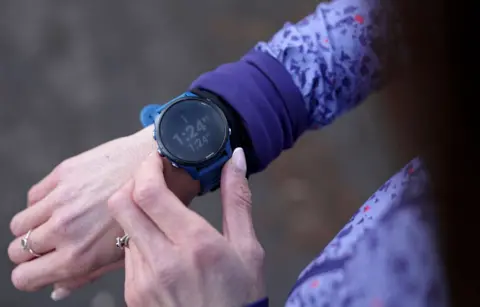
The Data Dilemma
My thoughts on mine? Right now, annoying. It's reporting my speed is wrong, causing me to question whether the foliage along my route are blocking my GPS connection.
Countless individuals of us strap these little gadgets onto our arms and wear them constantly, seemingly comfortable with the fact they're perpetually tracking us.
Gone are the days when we relied on them solely to give us an rough count of our pedometer reading. Currently, they can measure our sleep quality, blood pressure, heart rate variability (HRV), our body battery.
It's a challenge to find a physical metric they aren't designed to measure.
But are they able to do what they claim to do? And are the numbers we scrutinise a true reflection of reality? Do they boost our daily wellness, or do the avalanche of readings and cheerleading alerts just add to our daily stresses?

Addiction or Aid?
"I find myself getting a a little fixated with mine," an individual admits.
While she values how her device monitors her exercise, she finds some of its other features "daunting" at times - a feeling initially realised during a significant period.
Prior to discovering she could adjust the settings, her smartwatch repeatedly informed her she was not being productive enough. In a new phase, the watch keeps telling her she's had a bad night's sleep.
"I am caring for a young baby, it's unnecessary for me to be notified I've not slept," she says. "I know that all too clearly."
Is it not possible to just take it off?
"It's possible, I suppose, but I've got this complicated dynamic with it," she says. "I value it for its exercise data, but I'm unsure whether the myriad other functions it can now do is possibly too much for me."
The Technology Behind the Tracking
Different brands of smartwatch has its own unique way of monitoring your health metrics and processing your data, but the most use sensors on the underside of the watch.
They usually project minute LED lights onto your arm which can monitor pulsation, detecting your heartbeat. More advanced devices measure changes in the skin conductance that passes over the skin to get an idea of your stress levels.
A Fine Balance
One expert says that overall for smartwatches, it's a "difficult line" - while the continuously improving tech could realistically save lives, "spotting abnormalities before we feel unwell", it could also turn us the tracked into the "anxious healthy".
He points out that the most advanced wearables can conduct tests like electrocardiograms (ECGs), which regularly monitor how normal the heart is. They can flag if someone is experiencing a heart arrhythmia, where there is irregular impulses in the heart causing an uneven pulse.
This does not necessarily indicate someone is about to have a heart attack, but it can give an advance notice they might be more vulnerable of a heart problem in the years to come.
But how to understand these numbers is complex. The expert worries that as further capabilities are added, people may struggle to fully comprehend their data.
"I'm not entirely convinced that having the capacity to monitor so many things is such a good idea," he says.
A clinical psychologist studying wearable tech echoes this sentiment. A study into the effect of wearable tech on a specific group of individuals with health issues suggested a minority of those who were given devices to monitor their cardiac function experienced increased anxiety and were "had a higher tendency to use medical services".
She identified a cycle with her patients - they saw a alarming metric on their watch. They grew concerned. Their heart rate rose. They got more worried. They looked a second time, and their anxiety increased again.
"If we see data about ourselves that we can't properly interpret then, naturally, we are going to become concerned," the psychologist says. "We monitor, we check again - it becomes a vicious cycle."


